Analytical intelligence synthesized for private client review
An in-depth examination of remote hill estates in the Nilgiris and Western Himalayas. Vikas Joshi details how rammed-earth structural walls, triple-glazed glass pavilions, and autonomous micro-hydro grids create resilient, regenerative luxury retreats.
Key Strategic Takeaways
- Stabilized rammed earth walls deliver R-values exceeding 2.2, retaining diurnal solar heat through sub-zero alpine nights
- Autonomous estate microgrids combine localized micro-hydro turbines, solar pergolas, and lithium iron phosphate storage
- Tea and coffee plantation zoning preserves pristine buffer perimeters of 50 to 200 acres around living pavilions
- Passive rainwater harvesting cascades into retention ponds for natural fire defense and agricultural irrigation
Key Inquest Topics
At elevations above 6,000 feet in Coonoor, Kotagiri, and the Himachal valleys, a radical architectural dialogue is unfolding between raw earth and precision-engineered glass.
The Call of the Mountain Escarpment
Wealthy urban patrons are acquiring century-old tea estates and apple orchards, commissioning pavilions that do not conquer the mountain, but merge into its contours.
Monolithic Rammed Earth: Soil as Monument
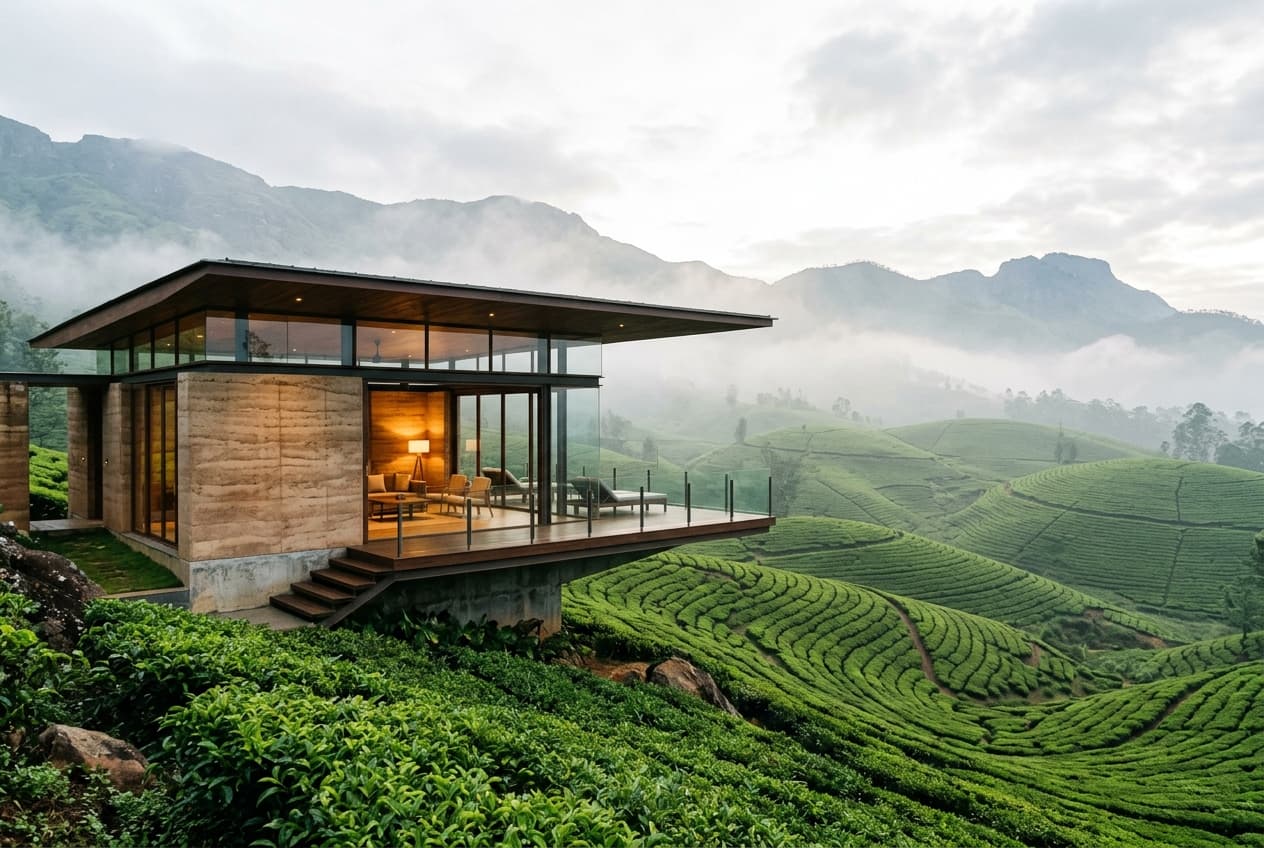
By compressing local subsoil, clay, and small gravel with 6% mineral stabilizer inside heavy wooden forms, architects create 500mm-thick monolithic walls. The layered stratification reflects the geologic timeline of the hill itself, providing exceptional thermal inertia.
Cantilevered Glass Pavilions: Framing Cloud Cascades
Resting atop stone plinths, floor-to-ceiling triple-glazed thermally broken glass boxes float over tea bushes, offering 270-degree panoramas of rolling mist without thermal leakage.
Regenerative Microgrids and Natural Sovereignty
With gravity-fed mountain spring intake, zero-waste greywater bio-filtration wetlands, and silent micro-hydro generation, these sanctuaries remain fully energized through regional grid failures.