Analytical intelligence synthesized for private client review
A material monograph comparing pure calcite Makrana marble from Rajasthan with Italian Carrara marble in coastal and tropical luxury estates. Vikas Joshi investigates calcitic density, thermal dissipation, porosity, and resistance to saline ocean breezes.
Key Strategic Takeaways
- Makrana marble contains 98% calcium carbonate with negligible iron oxide, preventing yellowing when exposed to saline coastal humidity
- Carrara marble, while celebrated for fine grey veining, is more porous and prone to moisture staining in tropical monsoons
- Makrana exhibits superior thermal conductivity, remaining noticeably cooler under barefoot contact during peak summer heat
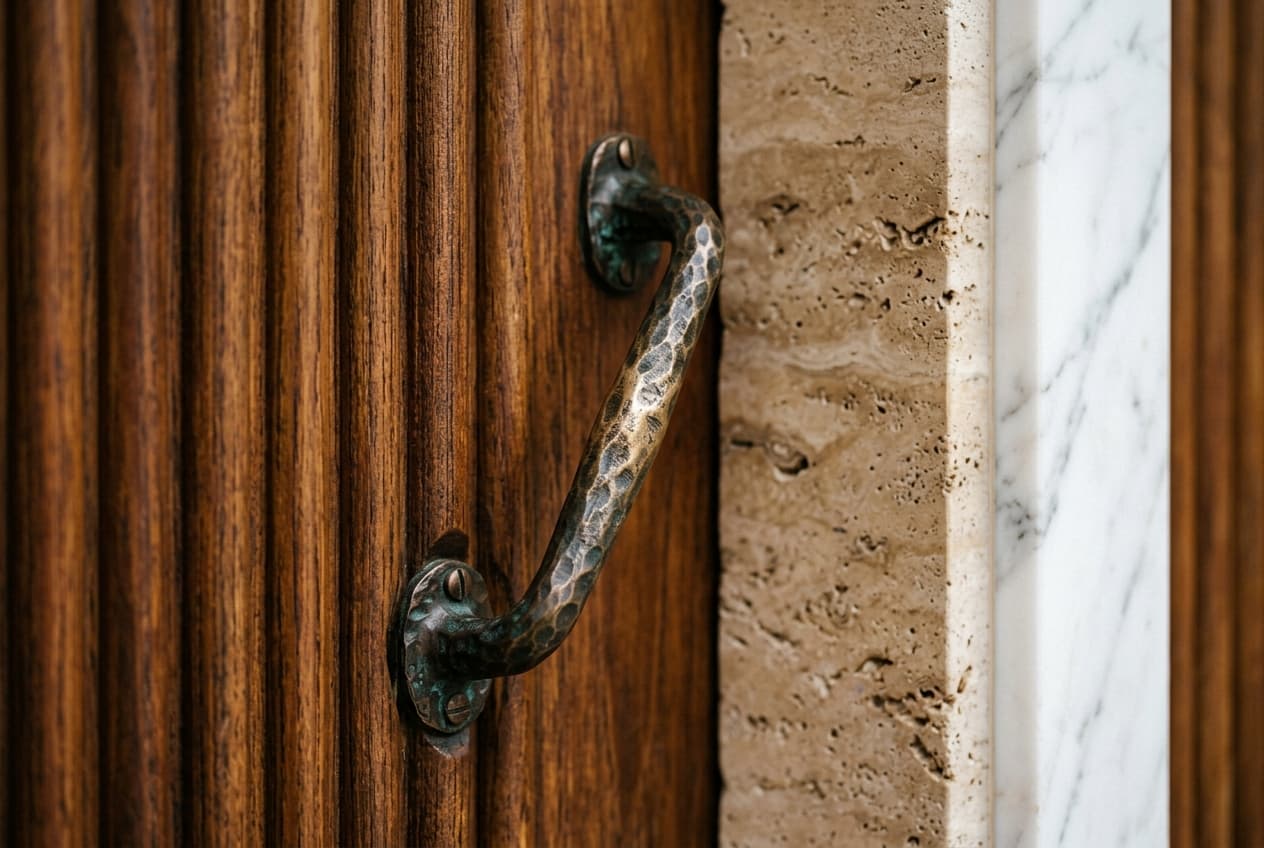
- Bespoke reclaimed Burmese teak millwork paired with unpolished stone creates timeless tactile equilibrium
Key Inquest Topics
When selecting natural stone for premier coastal estates in Mumbai, Goa, or Chennai, architects are confronted with a critical choice: the international prestige of Italian Carrara versus the geological permanence of Rajasthan's Makrana.
Quarry Lineage: Rajasthan's White Calcite vs. Tuscany's Veins
While Carrara marble from the Apuan Alps is prized for its delicate smoky feathering, it contains micro-pores that absorb atmospheric moisture. Makrana marble, quarried since the Mughal era in Nagaur, is an exceptionally dense pure calcite metamorphic rock.
Thermal Dissipation: The Barefoot Test in Coastal Enclaves
Under intense sunlight, Makrana marble rapidly sheds surface heat. Walking barefoot across a Makrana verandah at noon provides an immediate, palpable cooling sensation that Italian marbles cannot match.
Saline Air Resilience & Prevention of Yellow Patina
Salt-laden ocean air carries microscopic moisture that penetrates porous stone. Carrara contains trace ferrous minerals that oxidize into faint amber stains over time; Makrana's non-porous structure preserves its pure moonlit white patina indefinitely.