

Important Property Documents Required Before Buying Property
List of important property documents in India that are extremely important to verify before buying any residential or commercial property. Buying property in India is one of the biggest financial decisions for most people. Whether you are buying your first home, a plot, a commercial shop, or an investment property, proper document verification is extremely important before making any payment.
Many buyers spend weeks comparing best locations, property prices, amenities, and future appreciation potential. But one area that often gets ignored is legal documentation. A property may look attractive and fit your budget perfectly, but incomplete or incorrect paperwork can create serious legal and financial problems later.
Before investing in any residential or commercial property, buyers should understand the important legal documents required for secure property ownership in India. Proper property verification not only protects your money but also helps avoid ownership disputes, loan rejection, delayed possession, or any future legal complications.
Here are some of the most important documents every property buyer should check before purchasing property in India.
Sale Agreement an Important Property Document
The Sale Agreement is usually the first major legal document prepared during a property transaction. This document contains all the important details agreed upon between the buyer and seller.
It generally includes:
- Property details
- Final sale price
- Payment schedule
- Possession timeline
- Terms and conditions
- Penalty clauses
- Date of execution of the final sale deed
Before signing the agreement, make sure that all verbal commitments made by the builder or seller are clearly mentioned in writing. Buyers should always read every clause carefully instead of signing documents in a hurry.
Sale Deed or Title Deed
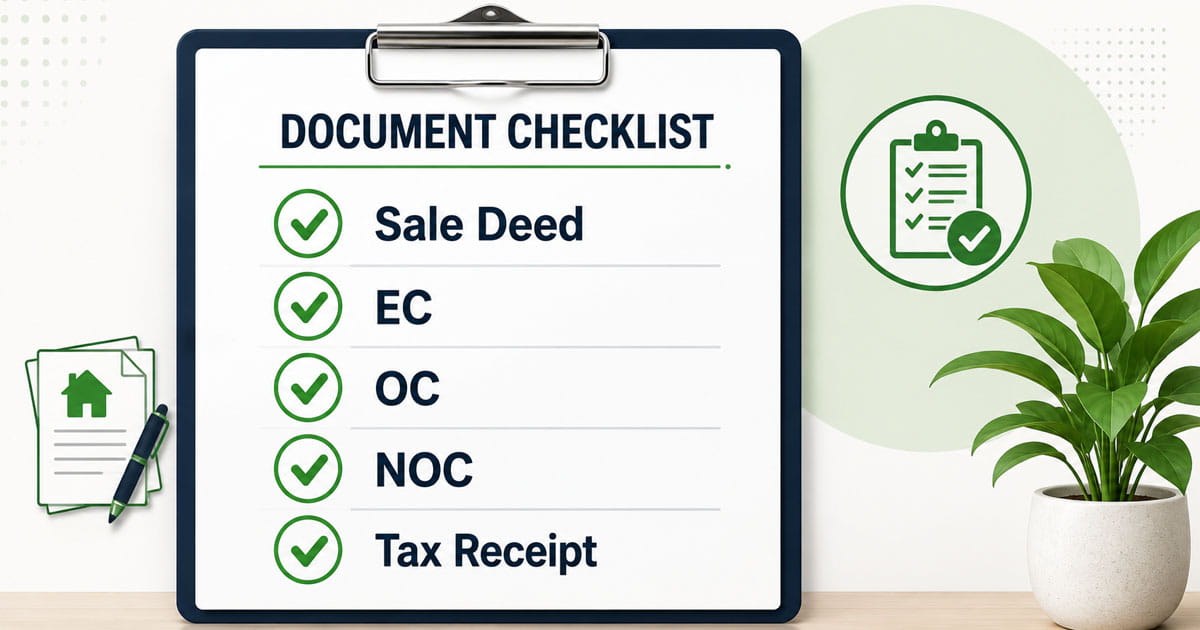
The Sale Deed, also known as the Title Deed, is one of the most important property documents in India. It acts as legal proof of ownership of the property.
Before purchasing any property, verify:
- The seller’s name matches government records
- The property title is clear
- The deed is properly registered
- There are no ownership disputes
If the title is unclear or disputed, it is better to consult a property lawyer before moving ahead. Many property fraud cases happen because buyers neglect title verification.
Power of Attorney
A Power of Attorney (POA) becomes important when the property transaction is being handled by someone on behalf of the original owner. For example, if the owner is living abroad or has authorized another person to sell the property, a legally valid Power of Attorney must be produced during the transaction.
Buyers should verify:
- Whether the POA is registered
- Whether it is still valid
- Whether it grants complete authority to sell the property
This document is especially important in resale property transactions.
Allotment Letter
If you are buying property directly from a builder or developer, the Allotment Letter is another important document.
This document generally contains:
- Unit details
- Project information
- Payment plan
- Outstanding dues
- Possession timeline
Banks also ask for the allotment letter during home loan processing. In resale cases, buyers usually receive a copy of the original allotment letter from the first owner.
Payment Receipts
Payment receipts may look simple, but they are extremely important while buying property.
Always collect:
- Booking receipts
- Down payment receipts
- Installment payment records
- Final payment receipts
These receipts act as proof of all payments made to the builder or seller. They are also useful during home loan approval and future resale transactions. If you are buying a resale property, ask the seller to provide copies of previous payment receipts as well.
Khata Certificate or Mutation Documents
The Khata Certificate or Mutation Record confirms that the property is officially recorded in municipal or local government records.
This document helps establish:
- Property ownership
- Tax assessment details
- Legal recognition of the property
Banks often require Khata or mutation documents before approving a home loan. Different states in India may use different names for this document, but the purpose remains the same.
Read: How RERA Protects Property Buyers in India: Complete Guide
NOC From Government Authorities
Before constructing a real estate project, builders are required to obtain several No Objection Certificates (NOCs) from government departments.
These approvals may include:
- Fire department clearance
- Pollution control approval
- Water and sewage approval
- Environmental clearance
- Electricity department approvals
These NOCs confirm that the project complies with government rules and development regulations. Before investing in under-construction projects, buyers should ask for copies of important approvals and NOCs for proper verification.
Property Tax Receipts
Property tax receipts help verify that there are no pending tax dues on the property.
Buyers should request:
- Latest property tax receipts
- Previous years’ tax payment records
Ideally, check at least the last five years of tax receipts. This step helps ensure that there are no unpaid liabilities attached to the property.
Encumbrance Certificate (EC) for Property Verification
An Encumbrance Certificate (EC) confirms that the property is free from legal or financial liabilities.
This certificate helps buyers verify:
- No active mortgage
- No pending loans
- No legal claims
- No financial disputes related to the property
The EC is also an important document required by banks during home loan approval. A clean Encumbrance Certificate gives buyers greater confidence before finalizing the transaction.
Occupancy Certificate (OC) Before Buying Property
The Occupancy Certificate (OC), also known as the Completion Certificate in some cases, confirms that the property has been constructed according to approved plans and local government regulations. The certificate confirms that the building is legally fit for occupation.
Buying property without an Occupancy Certificate can create issues related to:
- Water connection
- Electricity connection
- Legal ownership
- Future resale
- Home loan approvals
Always ask for the Occupancy Certificate before taking possession of a ready-to-move property.
Final Thoughts – Important Property Document in India
Buying property involves more than choosing the right location or negotiating a favorable price. Proper document verification is equally important for making a safe and secure investment. Whether you are buying a residential apartment, plot, villa, office space, or commercial property, checking legal documents carefully can protect you from future legal and financial complications.
If you are unsure about any paperwork, it is always advisable to consult an experienced property lawyer before making the final payment. Understanding important property documents before buying can help buyers make safer and smarter real estate decisions in India.
Read: Why Good Credit Score is important for Home Loan
Frequently Asked Questions (FAQs) – Important Property Documents Required Before Buying Property
Which is the most important property document when buying property in India?
The Sale Deed or Title Deed is considered the most important document because it legally establishes ownership of the property.
What is an Encumbrance Certificate (EC)?
An Encumbrance Certificate confirms that the property is free from loans, mortgages, legal disputes, or financial liabilities.
Is Occupancy Certificate (OC) mandatory before possession?
Yes, the Occupancy Certificate is important because it confirms that the property is legally approved for occupation by local authorities.
Why are NOCs important while buying property?
NOCs confirm that the project has received approvals from government departments and complies with legal construction guidelines.